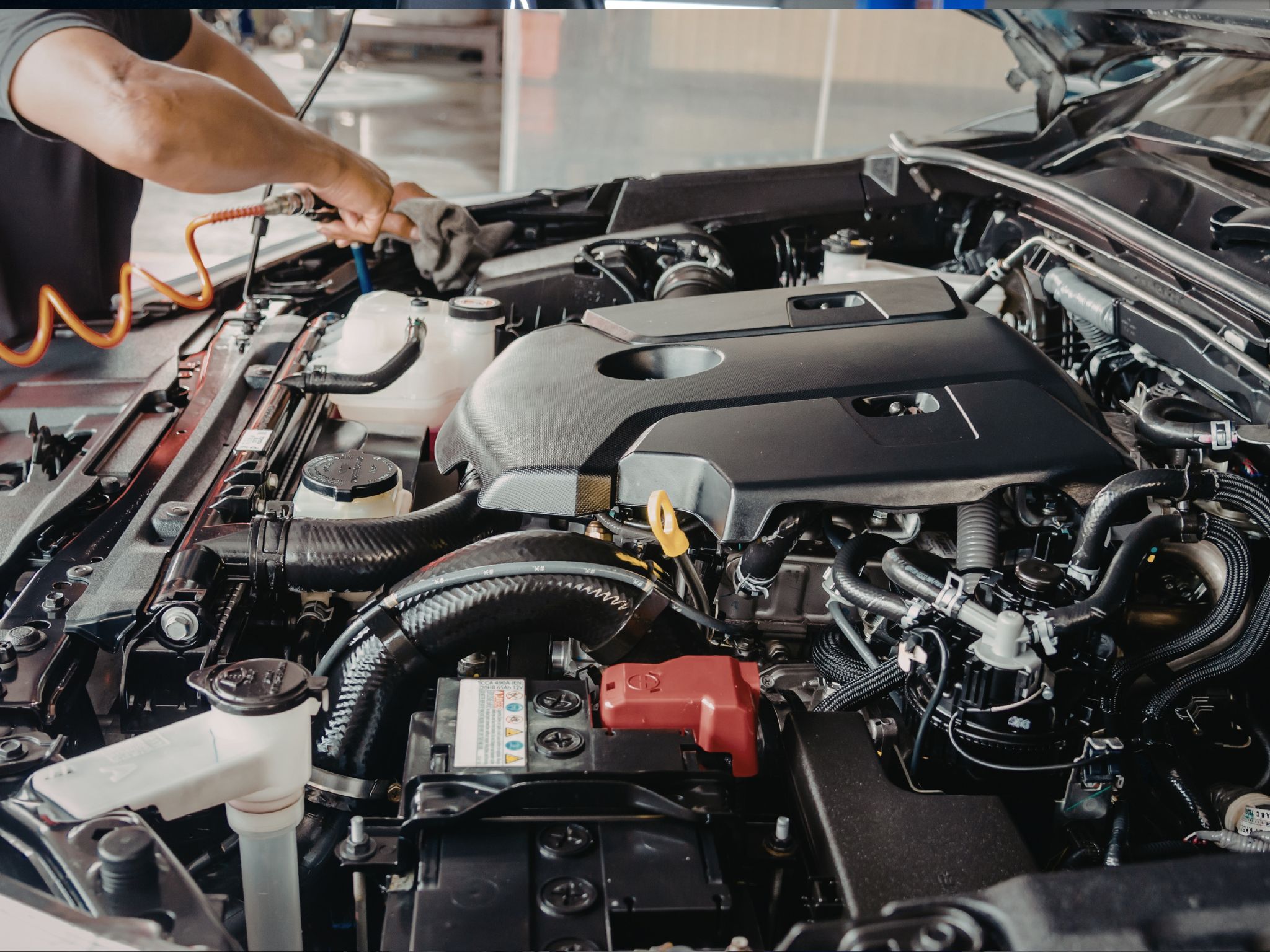
What a car diagnostic scan tells you (and what it can’t)
A car diagnostic scan reads fault codes, but it can’t tell you everything. Here’s what a scan finds, what it misses, and when you need one.


There are two main pathways that create brake judder, and they look almost identical from the driver’s seat.
The geometry path. If a disc does not rotate perfectly true on the hub, the pads touch it unevenly. Over thousands of braking events, that uneven contact wears the disc face into a pattern with measurable thickness variation. The disc may have been perfectly round when it was new. The problem was how it was mounted.
The most common real-world triggers include:
Bendix technical guidance specifically calls out uneven deposits on the hub face as a cause of disc runout that leads to shudder. It does not take much. A few hundredths of a millimetre is enough.
The friction path. Modern brake pads are designed to deposit a thin, even layer of friction material onto the disc surface. When that transfer layer goes down patchy, the disc ends up with thick and thin spots of deposited material. The result feels exactly like a “warped” disc, but the disc itself is geometrically fine.
Common causes of uneven transfer include:
The Centric/StopTech white paper on this subject goes directly at the point: many “warped disc” complaints are linked to uneven friction material deposition rather than permanent distortion.
In practice, the two pathways often overlap. A disc with mild runout from a dirty hub transfers pad material unevenly, which accelerates thickness variation, which makes the shudder worse over time.
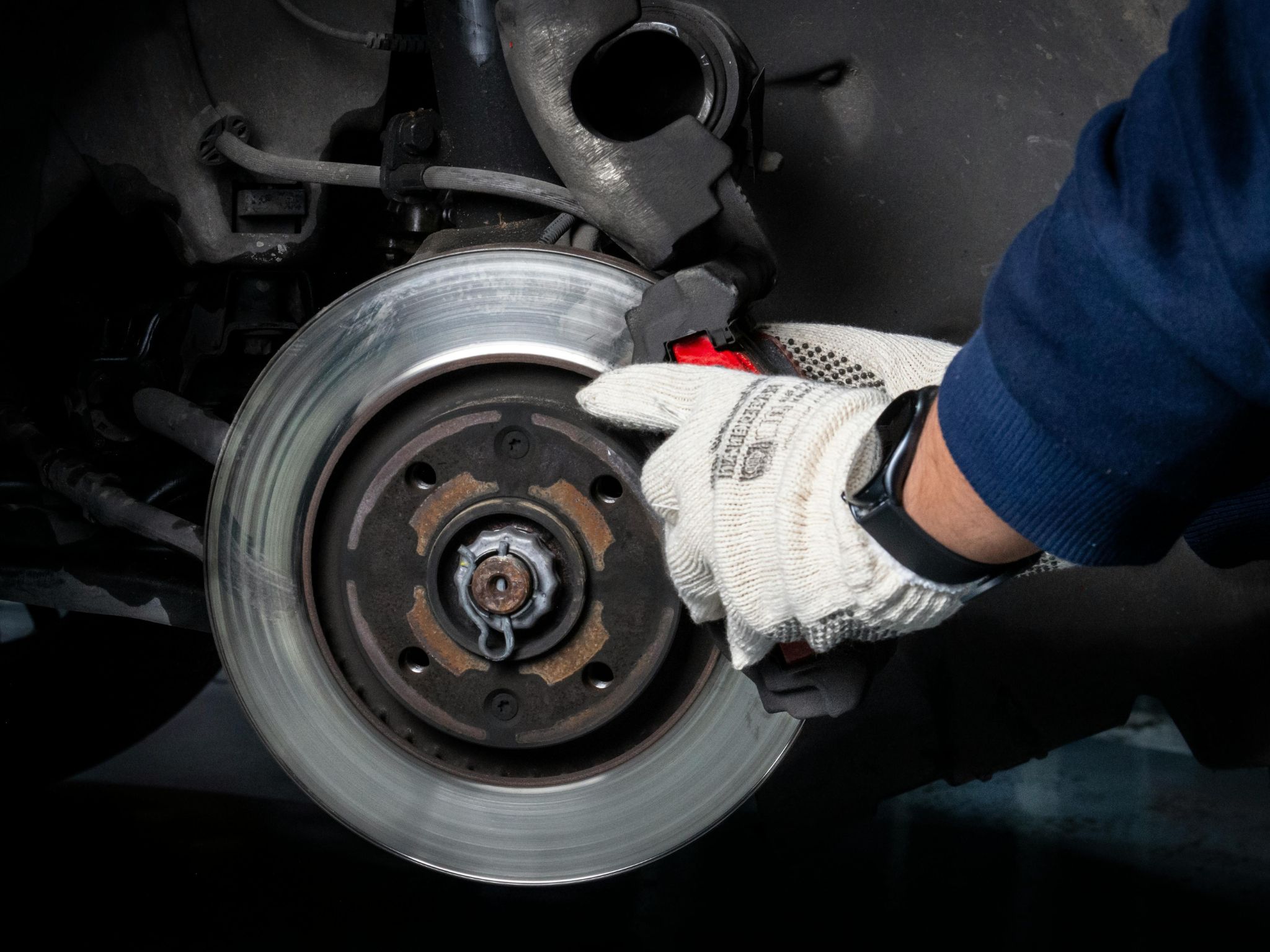
This matters because the fix is different. Replacing discs that are not actually the problem resets the clock but does not solve it. The shudder comes back. The owner pays twice.
If the shudder appeared immediately after a brake job, the most likely culprit is the mounting interface. The hub face was not cleaned properly, or the disc is not seated square on the hub. The second possibility is a bedding or transfer issue, particularly if the pads were not given a proper bed-in cycle.
If the shudder developed weeks or months after the brake job, the likely path is runout-to-thickness-variation progression. A disc with marginal runout has been slowly worn into a pulsing pattern. A sticking caliper or dragging pad can accelerate this significantly.
If the shudder is worse after heavy braking or a long downhill descent, the friction transfer path is the prime suspect. Overheated pads deposit material unevenly, and the effect is most noticeable when the system is hot.
If one wheel is noticeably hotter than the others after a normal drive, stop and get the car inspected. Caliper drag or a seized slide pin can overheat one corner of the car, cook the pads and disc, and produce shudder that worsens rapidly.
| What you feel | What to look for | Likely cause | What confirms it | Typical fix |
|---|---|---|---|---|
| Pedal pulses and steering shakes under braking | Happens only on the brakes, often speed-related | Disc thickness variation or runout | Measure runout and DTV. Inspect hub face and disc seating | Correct hub/disc interface, then machine or replace disc if needed |
| Shudder appeared immediately after brake job | Onset straight after new pads or discs | Hub face contamination. Disc not seated flat | Hub face inspection. Runout check with disc mounted | Clean and true mounting surfaces. Correct fitment. Re-measure |
| Shudder worse after a hard stop then holding at lights | Developed after one heavy braking event | Uneven friction transfer or thermal hotspots | Disc face shows patchy deposits or discolouration | Correct pad/disc pairing. Fix any drag. Re-bed or replace as needed |
| Brake vibration and one wheel runs much hotter | Heat, smell, dust concentrated on one side | Caliper drag or seized slide pins | Temperature comparison. Caliper function check | Repair sticking caliper, hoses, or slides. Then address disc and pad condition |
| Vibration present while cruising and while braking | Felt at steady speed, not only under braking | Tyre or wheel issue exposed by brake work | Wheel balance and tyre inspection | Fix tyre/wheel issue first, then reassess braking |
There are four repeat-visit traps that cost owners money, and they all share the same root cause: the parts were replaced without addressing what created the problem.
The hub face was not cleaned. A new disc can be perfectly manufactured and still run out of true if it is mounted on rust scale, debris, or a raised burr. Hub face condition is the single most overlooked step in a brake job. The disc sits on the hub. If the hub is not flat, the disc is not flat. Everything that follows is a consequence.
The pads were fitted without bedding. Different pad and disc combinations behave differently. Some require a specific bed-in procedure to establish an even transfer layer. Skip that step, or overheat the brakes on the first heavy stop, and the transfer layer goes down patchy. The result feels like a geometry problem but is actually a material problem.
Parts were replaced without diagnosis. If the underlying cause is runout at the hub or a dragging caliper, fitting new discs and pads simply resets the clock. The shudder returns in weeks or months, and the owner pays for the same job a second time.
The wheel mounting surface was not checked. Paint build-up on wheel mounting faces, incorrect wheel seating, or uneven tightening practices can all contribute to disc runout. Several manufacturer service bulletins address this specifically.
Yes. If the disc is not mounted squarely on the hub, or if friction material transfers unevenly during bedding, judder can appear even with new parts. The disc itself may be fine. The mounting or the transfer process is the issue.
No. Many cases are linked to disc thickness variation from runout or uneven friction transfer rather than permanent disc distortion. The phrase “warped rotors” is used loosely in the industry and often leads to parts being replaced unnecessarily.
Judder is a repeating force variation. At higher wheel speeds, the frequency and the vehicle’s dynamic response make it more noticeable. At lower speeds, the same variation exists but may not be felt as clearly.
Sometimes, but only if the root cause has been addressed first. If the hub face is still contaminated, or a caliper is still dragging, the shudder will return after machining. Diagnosis and measurement need to come before any cutting.
Wheel and disc mounting factors can contribute to runout if surfaces are not clean and flat, or if there are seating issues. A workshop should check the interface and measure runout as part of any brake judder investigation.
Mild judder may not be an immediate safety emergency, but it should not be ignored. If it is severe, worsening, accompanied by pulling, grinding, overheating smells, or warning lights, get the car inspected urgently.
Immediate onset most often points to a mounting or runout issue at the hub/disc interface, or to a bedding and transfer problem. It is less likely to be a wear issue if the parts are new.
Ask whether they will measure disc runout and disc thickness variation, inspect the hub and disc mounting surfaces, and check for caliper drag and uneven pad wear. These steps distinguish between the geometry and friction pathways and avoid unnecessary parts replacement.




Monday-Friday: 8:00am - 5:00pm
Saturday-Sunday: Closed

Address: 9 James Street, Clayton South 3169 VIC
Phone: 03 9544 4654
Email: con@clayleighmotors.com.au
Website design by CJ Digital